Product category
Sanding benches with extraction, masking trolleys and smart storage — equipment that keeps the workshop efficient.
Lead time: typically 2–3 days.

Installed at customer sites
In depth
Workshop fittings for refinishers are rarely about furniture. They're about where the sanding dust goes, how far the painter has to walk to fetch masking paper, and whether the bumpers lie in a pile on the floor or hang safely up high. Green Line's workshop range is built around those questions.
The starting point is that the equipment must withstand hard daily use for twenty years. We manufacture it in Frillesås, south of Gothenburg (Sweden), in powder-coated and galvanised steel, and we have customers still using equipment we delivered in the 1980s.
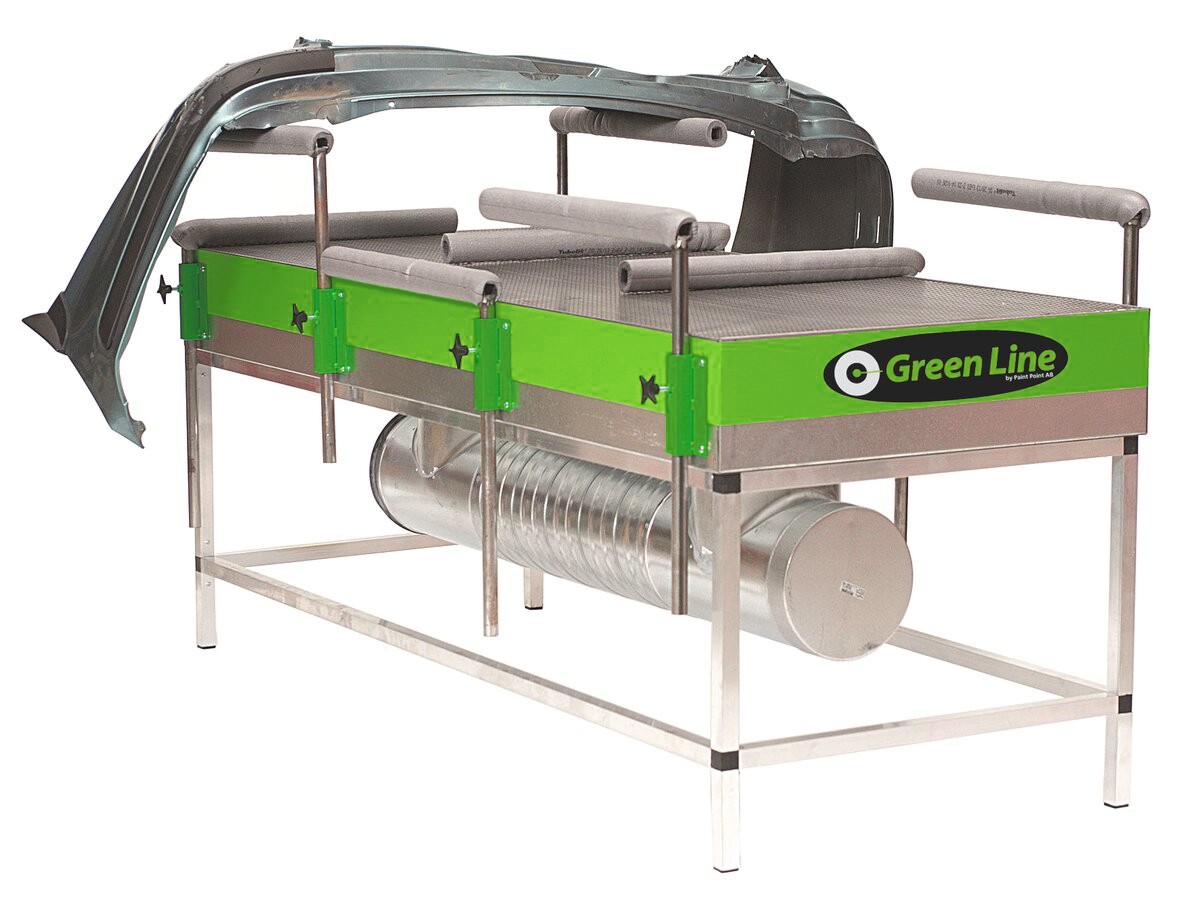
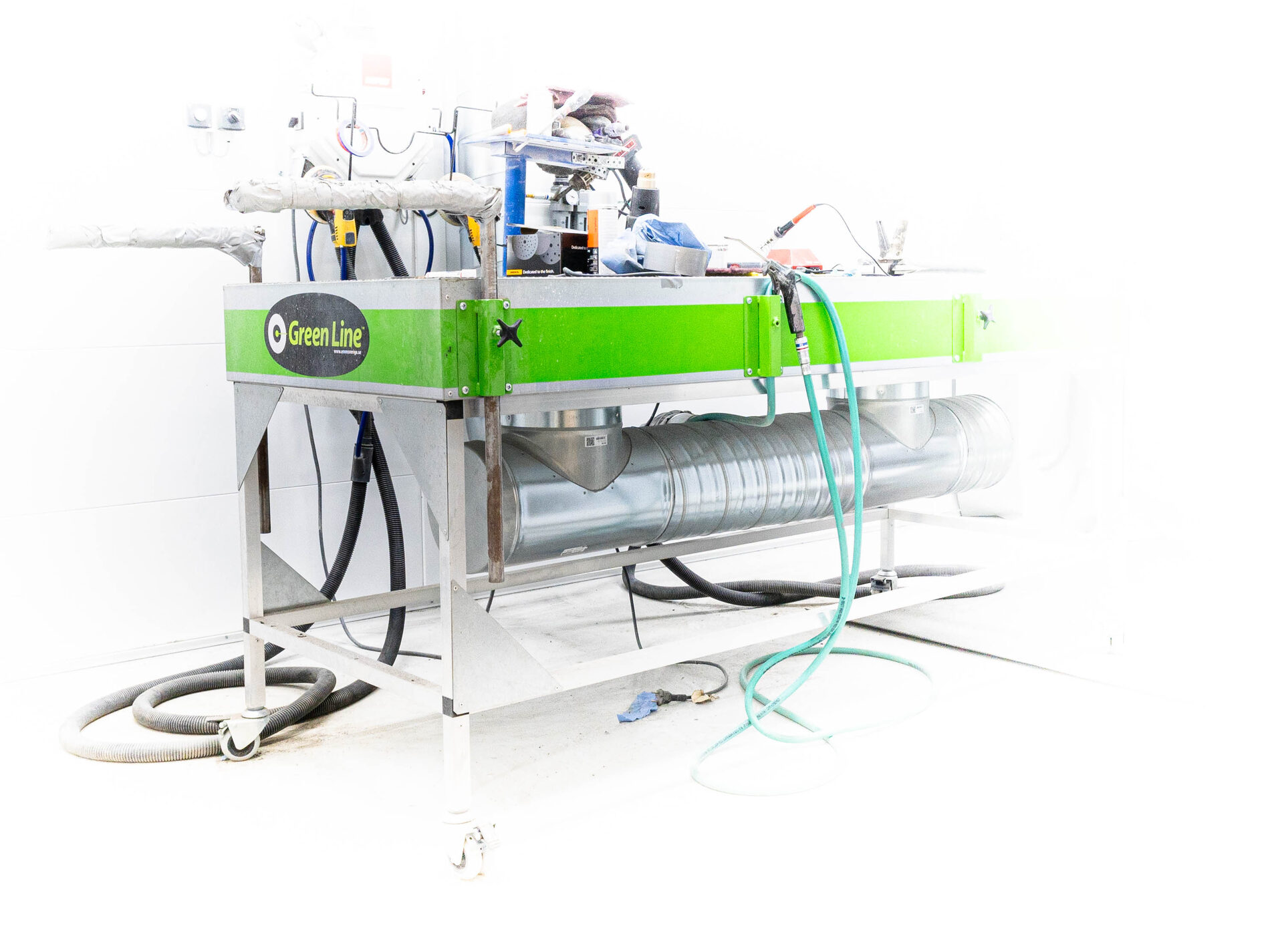
The sanding bench provides extraction across the entire perforated work surface — 1,500 m³/h — so the sanding dust is captured where it's created rather than ending up in the lungs or on surfaces about to be painted. Eight individually adjustable arms hold even large plastic car parts in the right position.
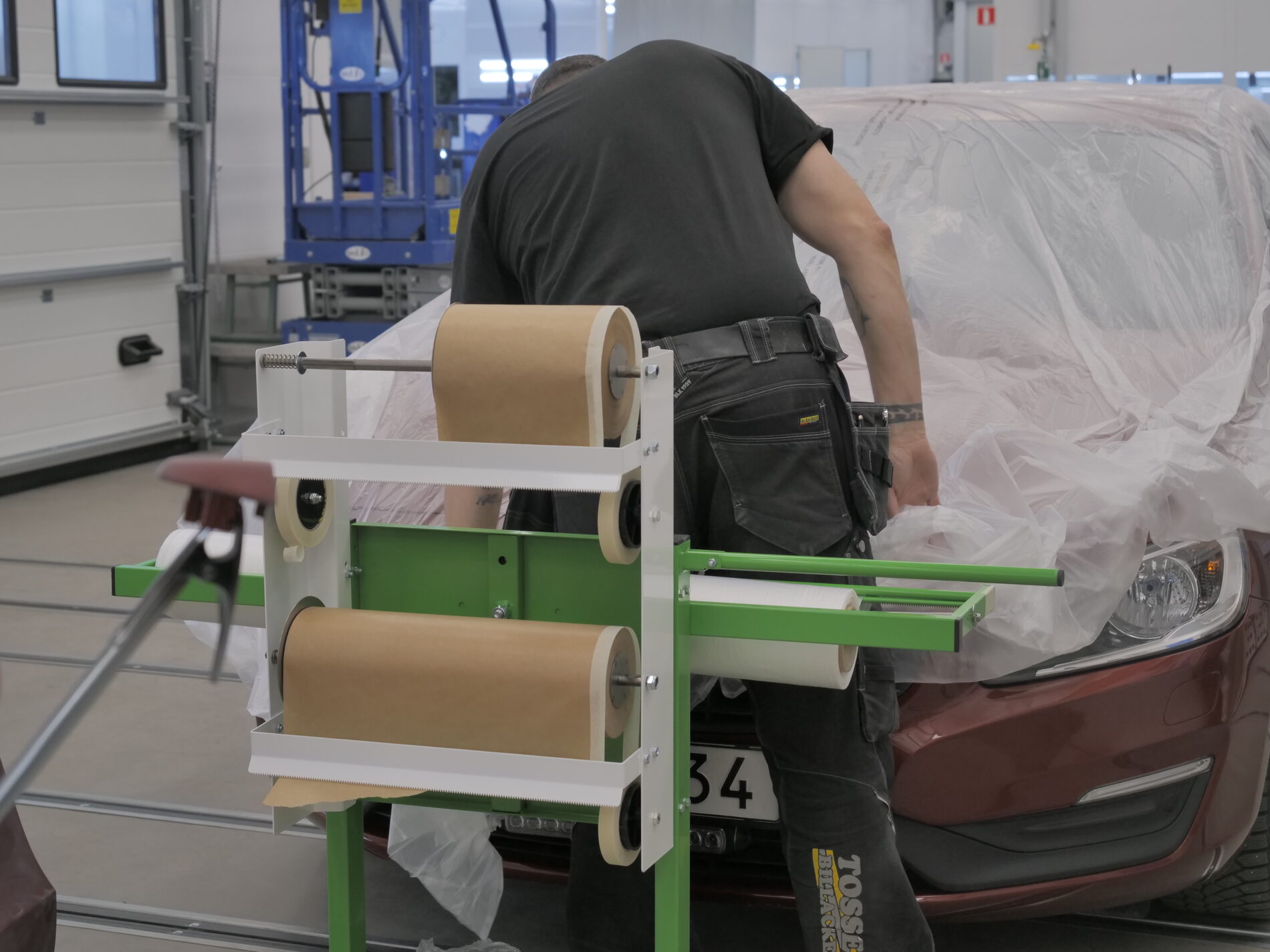
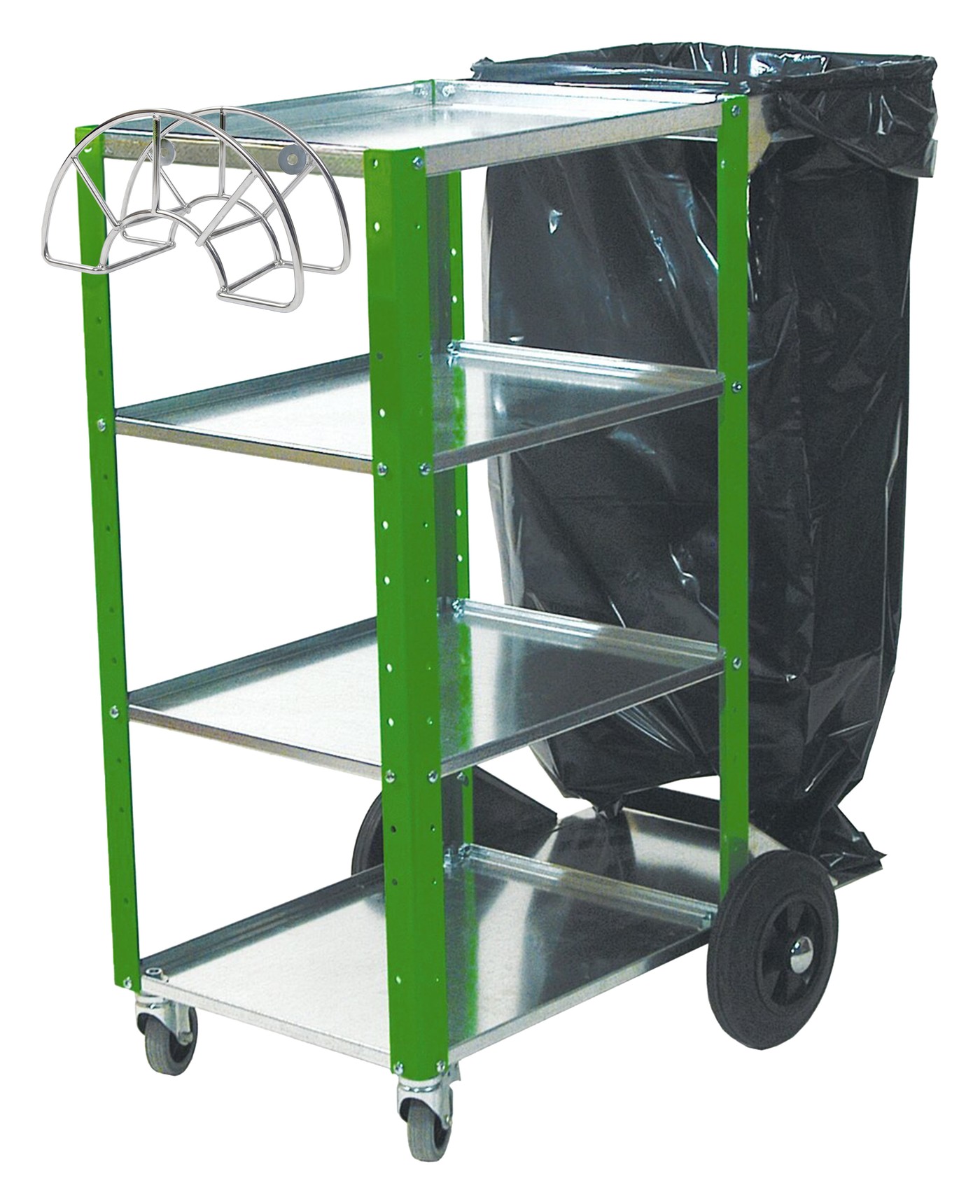
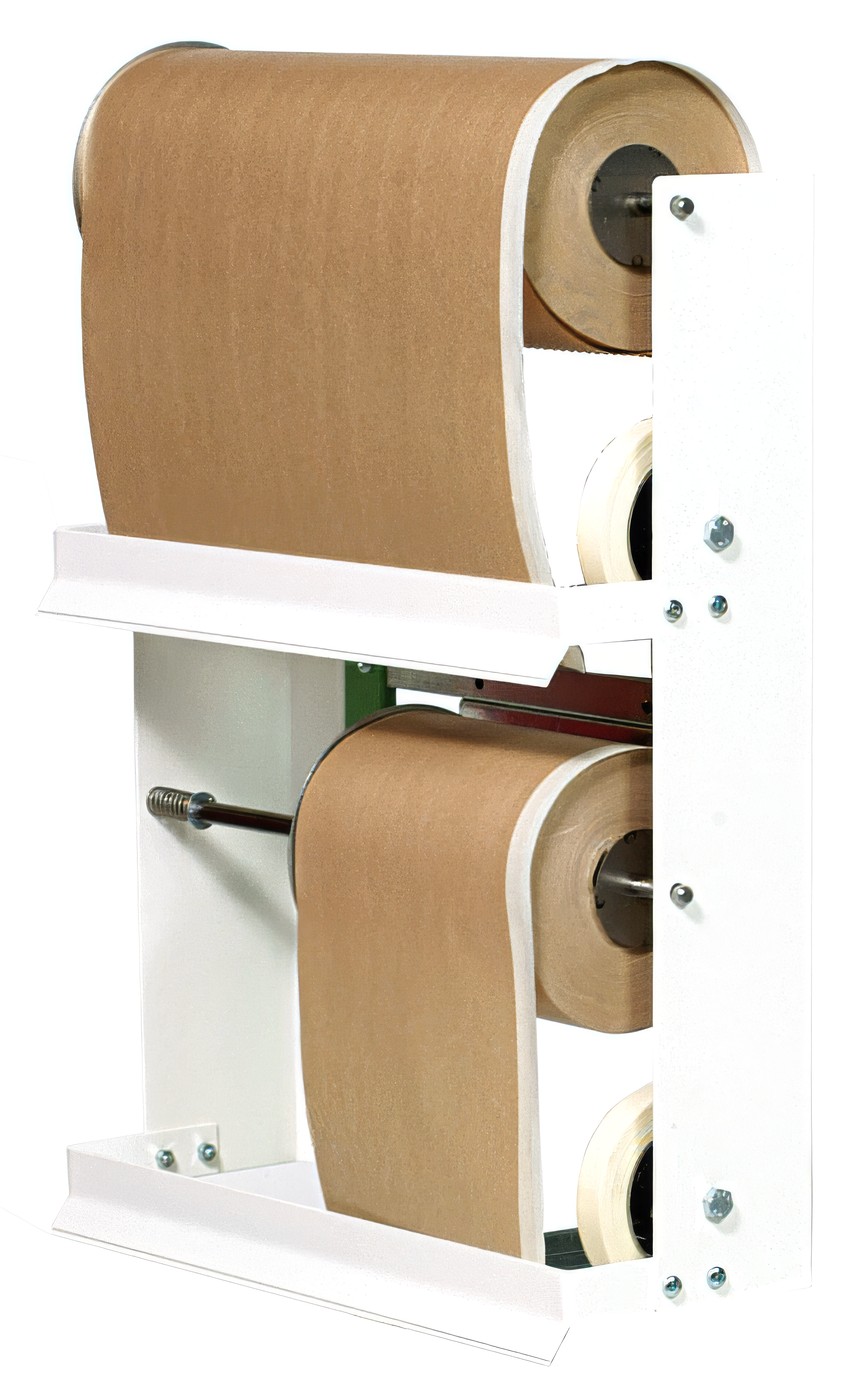
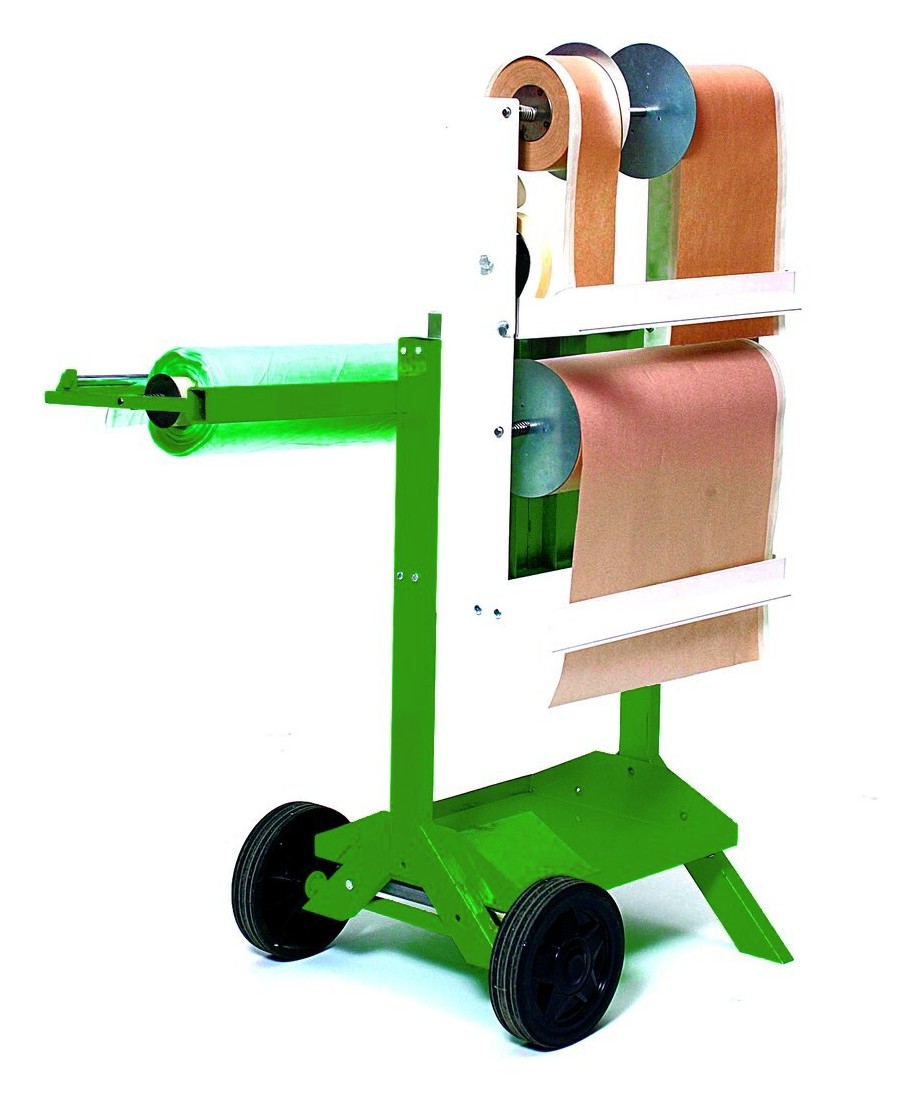
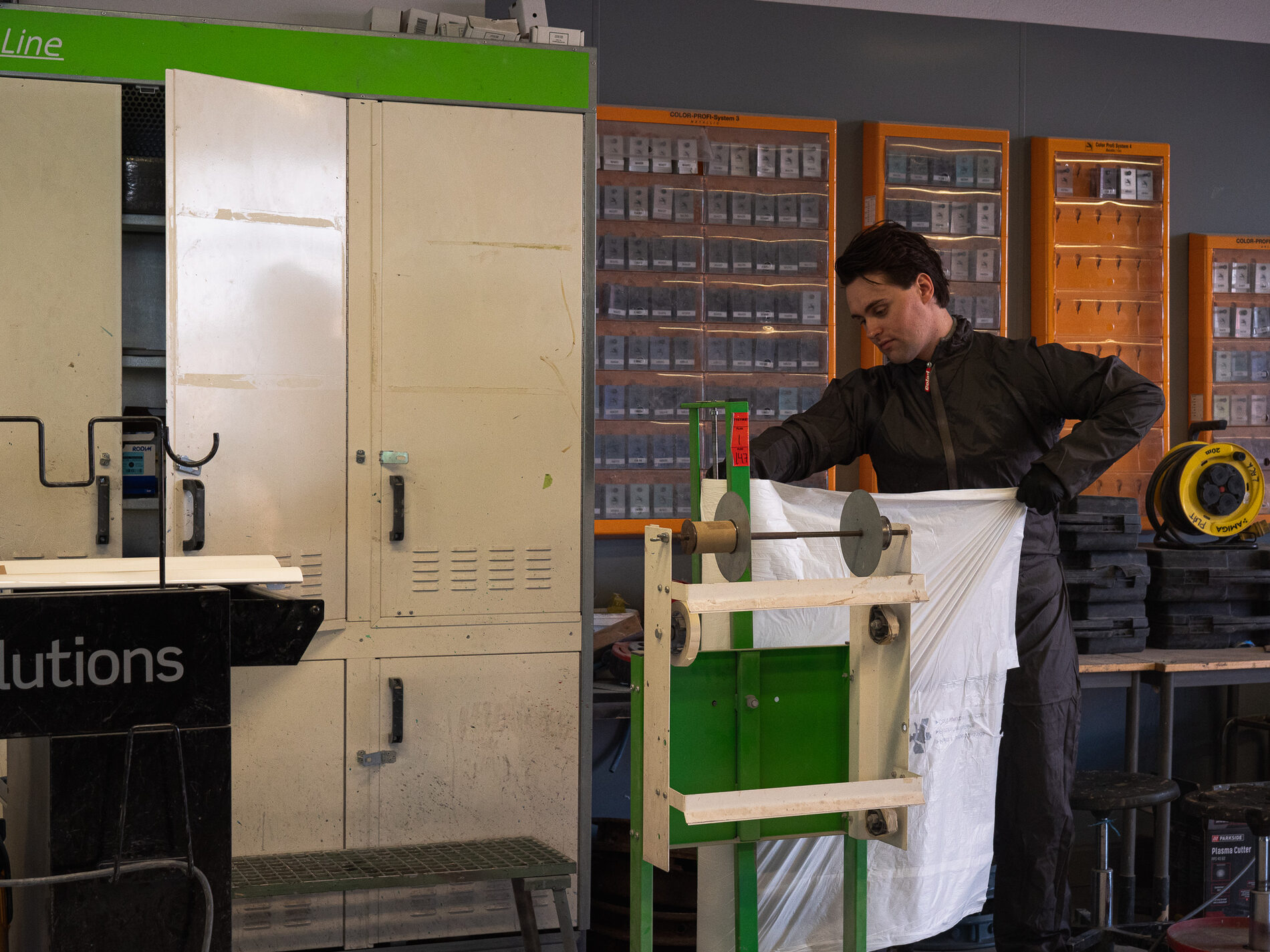
The Collectum work trolley gathers the sander, paper, tools and refuse sack on four shelves that roll along to the car. Combined with Addum 20/40 it becomes a mobile masking station with three paper widths and tape within reach. Preparandum (9-902) does the same for those who mask a lot, and Preparandum 100 (9-901) also has room for a 100 cm wide masking-film roll.
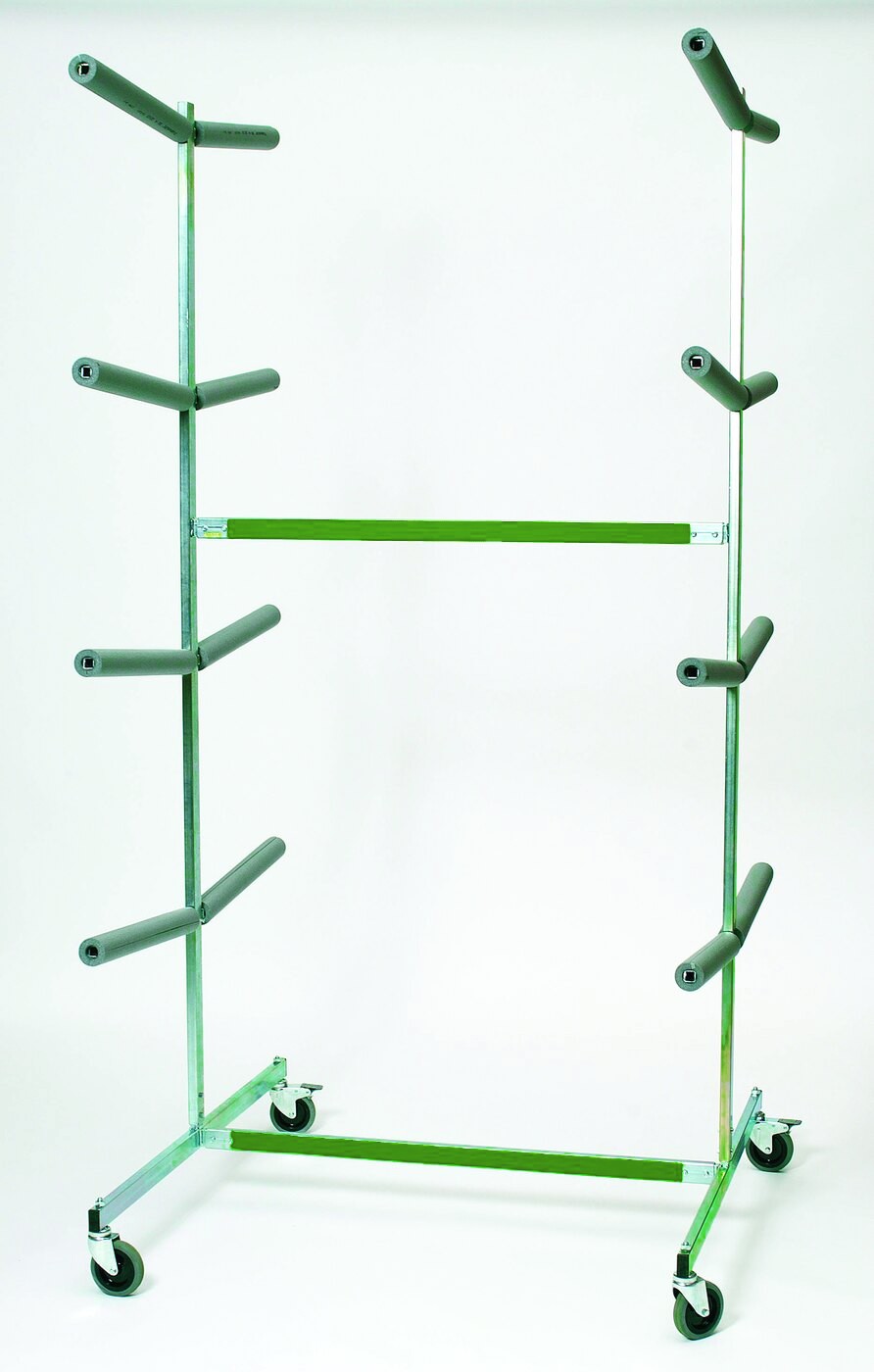
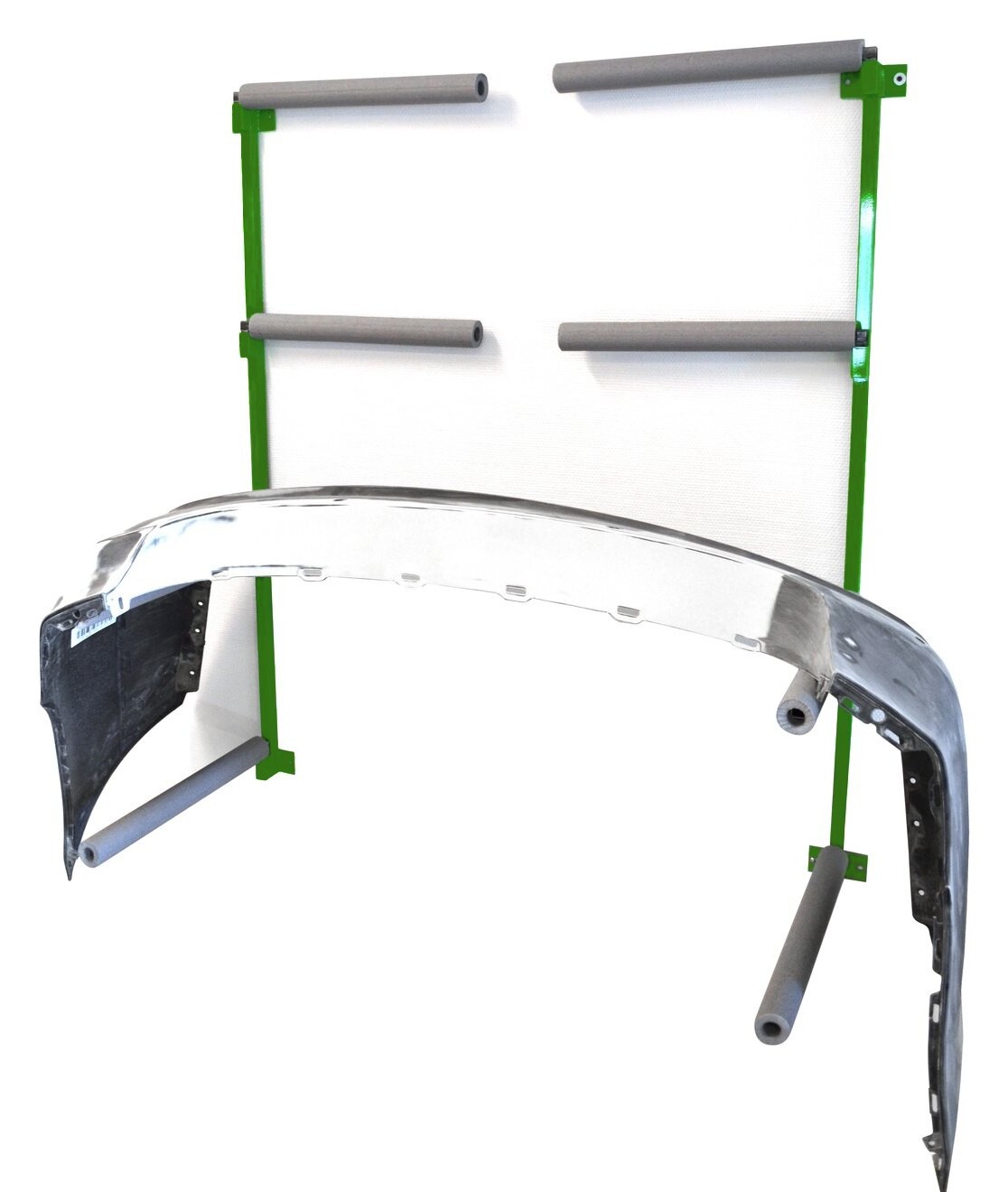
Stötis solves bumper storage: eight bumpers on one square metre of floor space, mobile on four castors. Where the floor is already full, there's Stötis Vägg, which folds flat and sits just 10 cm from the wall.
A painter who doesn't have to hunt for materials, doesn't have to carry bumpers one by one, and doesn't have to breathe sanding dust is both faster and healthier. It's not equipment that shows up in the income statement as revenue — it shows up as fewer sick days, fewer re-sprays and shorter lead time per job.
We're happy to go through your workshop and point out where the bottlenecks actually are. Free and without obligation.
The most common objection to workshop fittings is that they're a luxury problem — that what matters is skill, not shelves. That holds as long as you only look at a single job. Reckon it up over a year instead and the picture changes.
A painter who walks ten metres extra thirty times a day walks more than 10 km a month without producing anything. Sanding dust not captured in the bench lands on the next part and causes a re-spray. A bumper in a pile on the floor gets a scratch and becomes a warranty claim. None of these costs show up on a single invoice, but they're there in the income statement.
