Personnel lifts · Economics
The most common objection we hear is that a personnel lift is expensive. It is — compared to a ladder. The question is what you compare it with, and over what period.
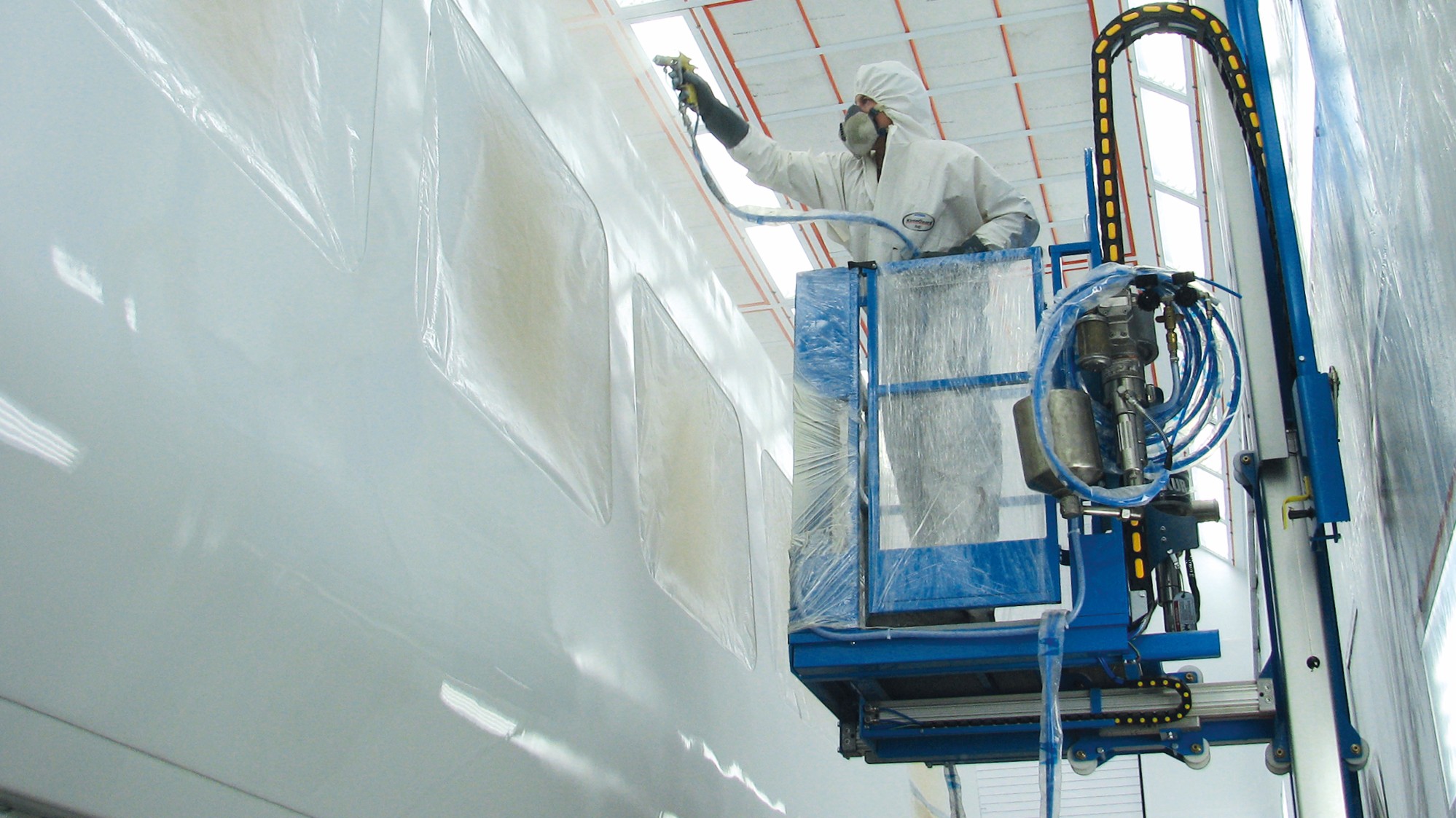
The biggest competitor to a WALL-MAN or LIFTMAN is not another personnel lift. It is a ladder. And compared to a ladder, a personnel lift is expensive — there is no talking around that. But "expensive" is a comparison, and it says nothing until you decide what you are comparing with and over what period.
A ladder or a mobile scaffold costs next to nothing to buy. That is the whole argument for them. What they do not do is last — physically or over time.
A WALL-MAN is engineered for a 25-year service life, equivalent to 50,000 operating hours (based on 8 hours a day, 250 days a year). That is not a brochure estimate; it is the service life the product is dimensioned for. WALL-MAN and LIFTMAN are made by Reglo AS in Norway and sold in more than 40 countries.
Put a ladder next to a lift that lasts 25 years, compare over that whole period, and the calculation looks different from the day of purchase.
The price of a personnel lift is not just the steel. It is:
A ladder gives you none of these four. It gives you a low purchase price, once.
Before we recommend a solution we check that it actually fits your workshop: that the wall and booth structure can carry the load of a WALL-MAN, or whether LIFTMAN is the right choice — it needs no wall verification and can be rolled between several booths and prep zones. We do not sell what will not work for you. Selling the wrong thing costs us more than asking one more question.
A simple way to look at it: divide the purchase price by 50,000 hours. The cost per working hour is low — and that is before safety, ergonomics and not having to buy again are counted at all.
A ladder that needs replacing, or a work injury caused by the wrong working height year after year, rarely shows up in the same calculation. That is exactly the comparison that means "expensive" needs explaining — not hiding.
To run your own numbers, use the calculator on the WALL-MAN and LIFTMAN pages.
Does your paint booth or prep zone suit a wall-mounted or a mobile solution? Get in touch and we will go through it together — before you decide, not after.
Read also: What applies if you have personnel lifts · FAQ on load capacity and the difference between WALL-MAN and LIFTMAN
