FAQ
Inspection, authorisation and rules under Swedish law — in plain English.
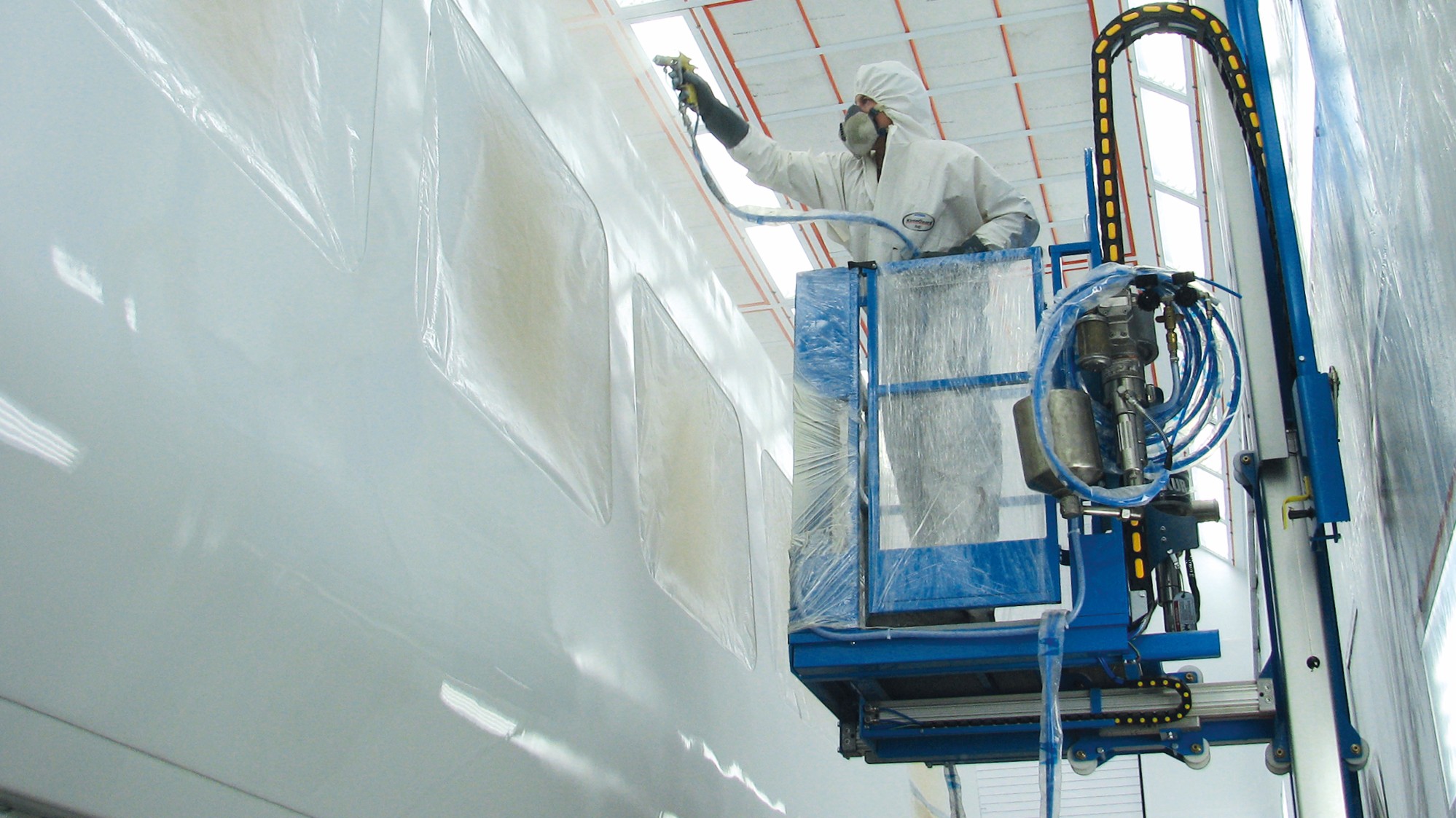
A personnel lift makes the job safer and the ergonomics better — but it comes with responsibility. These requirements apply in Sweden and come from the Swedish Work Environment Authority (Arbetsmiljöverket, AFS). Here is what you, as the owner or user of personnel lifts, need to keep on top of, in plain terms.
All power-driven lifting equipment must be inspected, and for mobile work platforms an annual recurring inspection applies. In addition, an installation inspection is required before a new or rebuilt lift is put into use, and an additional inspection is required after an accident, a major repair or when a fault is suspected.
The inspection is carried out by an inspection body accredited by Swedac — so a skilled in-house technician is not enough. The result is documented in a report, which you keep.
The operator must have documented theoretical and practical knowledge. That means a training certificate, not just experience. The employer must also give written authorisation for the use and ensure that in-house supervision and maintenance are carried out on an ongoing basis — and the manufacturer's instructions always apply.
Since 1 January 2025 the answer is simpler than before: the Swedish Work Environment Authority gathered everything on the use and inspection of lifting equipment into AFS 2023:11 (the old regulations AFS 2006:4, 2006:6 and 2006:7 have been repealed). For manufacturers, the Machinery Directive applies — which in turn is replaced by the EU's new Machinery Regulation in January 2027 — along with standards such as SS-EN 280 for mobile work platforms.
Reckon on three things in your annual calendar: the annual inspection, training certificates for everyone who operates the lift, and documented supervision. Keep on top of those and you are essentially there. Our WALL-MAN and LIFTMAN lifts are supplied CE-marked and ATEX-certified, and we are happy to help with the documentation ahead of an inspection. Contact us if you would like support.
This article is a simplified overview, not legal advice. Always check the current regulations with the Swedish Work Environment Authority — AFS 2023:11 ch. 11–13 with annex 12 is the main source. Last reviewed July 2026.
In Sweden, the requirements for personnel lifts are governed primarily by the Swedish Work Environment Authority's regulation AFS 2023:11 (Work equipment and personal protective equipment — safe use). Here is what applies to the machine, to the operator — and to the thing that a surprising number of people do anyway: stepping out of the basket at height.
The requirements apply regardless of the lifting height. There is no lower limit below which it becomes optional.
The annual inspection does not replace the daily responsibility. The operator must carry out a check before each use: function-test the controls, test the emergency lowering, look for leaks. The machine must also be maintained on an ongoing basis in line with the manufacturer's instruction manual.
The log must show what has been checked, when it was done and what actions have been taken. It is that documentation that matters if something actually happens — both in the investigation and in the insurance claim.
Whoever operates the lift must have documented theoretical and practical knowledge — in practice, lift training. In addition, a written authorisation to operate is required from the employer, and it must apply to that specific type of machine. An authorisation for a scissor lift does not cover a boom lift.
It sounds bureaucratic, but the logic is reasonable: a fall from a work platform is rarely less serious than a road accident, and for the latter we require a driving licence.
This is the question we are asked most often by workshops that refinish buses and lorries: may you step out of the basket up onto the roof?
The main rule is that it is strictly forbidden. A personnel lift is legally designed as a workplace you work from inside. It is not a lift built to transport people between levels.
Mechanical instability. When you leave the basket, 80–100 kg suddenly disappears from the platform. Depending on how the system handles pressure — hydraulically or pneumatically — and on the natural sway in the boom and mechanics, the basket may spring upwards or move sideways. What arises then is a crushing risk between the basket and the roof, and a fall risk in the gap between them.
Legal liability. The Swedish Work Environment Authority immediately issues a prohibition order and sanction charges if it sees the working method. If an accident occurs, the employer generally bears responsibility for a work environment offence, since the equipment has been used outside its intended purpose.
For it to be permitted, all four criteria below must be met. With standard machines, that is in practice very difficult.
If the need to get up onto bus roofs is recurring, a mobile scaffold tower, a fixed roof gantry or an equipped stair tower is usually the only convenient and legal way to solve the problem. It is not a compromise — it is the solution that is actually built for the task.
If, on the other hand, it is a matter of working at height, not of getting to another surface, the personnel lift is the right tool. That is the distinction the entire body of rules rests on.
The annual inspection by an accredited body. Training certificates and written authorisation to operate for everyone who operates. Documented daily supervision. Keep on top of those three and you are, in all essentials, there.
Our lifts WALL-MAN and LIFTMAN are supplied CE-marked and ATEX-certified, and we are happy to help with the documentation ahead of an inspection — drawings, instructions and technical data. Get in touch.
