FAQ
ATEX and Ex zones explained in plain English.
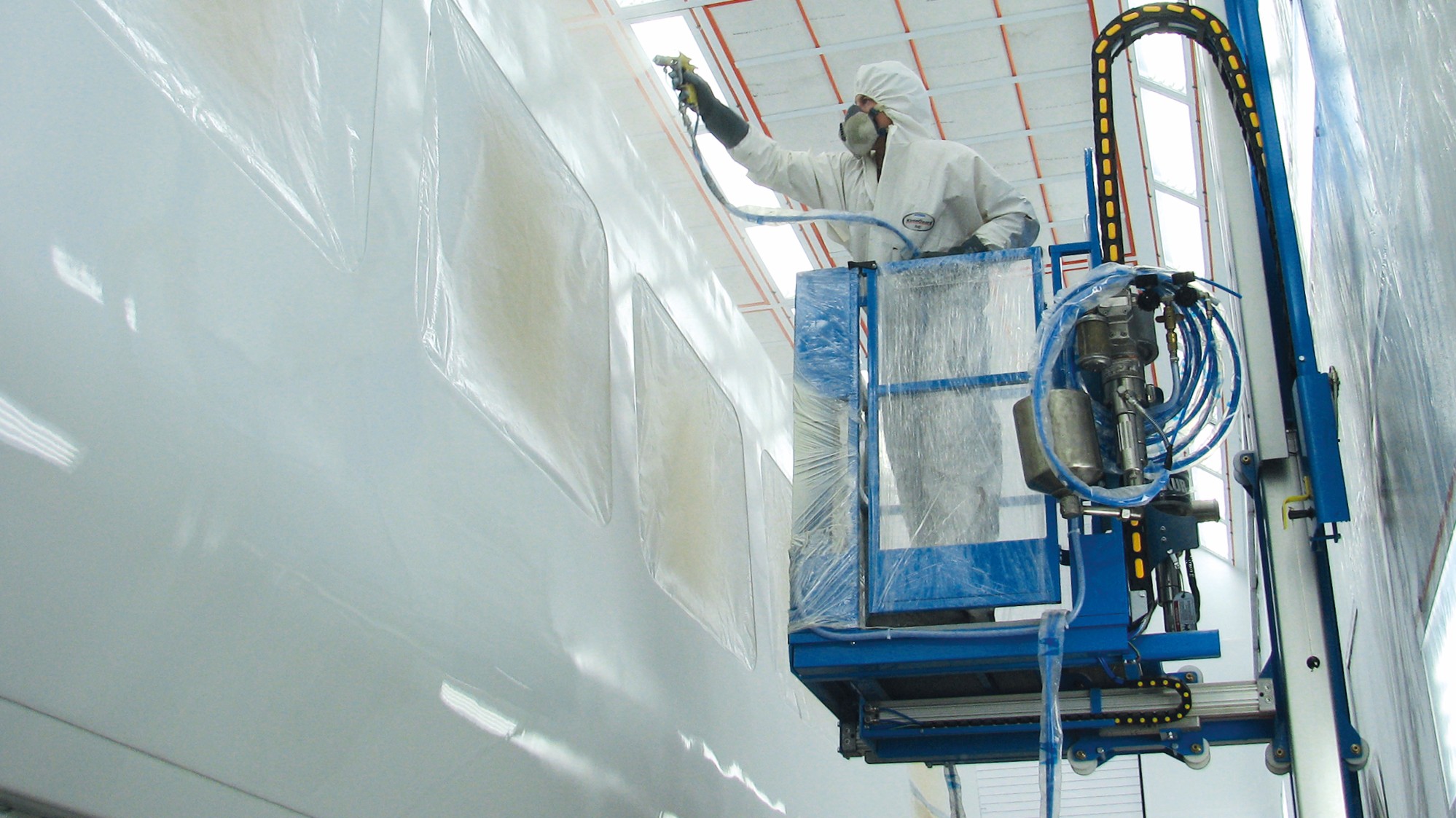
"Does this have to be Ex rated?" It is one of the most common questions we get — and the answer is actually not a product property, but a question of where the equipment is going to stand. Here we sort out how it all fits together, without heavy legal language.
In a refinishing workshop there are solvent vapours and paint particles that, mixed with air, can form an explosive atmosphere. The regulations (ATEX) therefore divide the premises into zones according to how often such an atmosphere can arise: zone 0, 1 and 2 for gases and vapours, zone 20, 21 and 22 for dust. The lower the number, the more often a could-go-bang situation can occur — and the tougher the requirements on what stands there.
Take a fume cabinet as an example: inside the cabinet, where solvents are handled and the vapours concentrate, it may be zone 1. But a little way outside, where the ventilation has captured most of it, it may not be an Ex zone at all. Same workshop, entirely different requirements — depending on where you stand.
The employer is responsible for carrying out an explosion risk assessment and an area classification, and collecting the result in an explosion protection document. Three questions govern the assessment: Which flammable substances are present? How often and for how long can they form an explosive atmosphere? And what properties do they have — ignition temperature, explosion limits?
Once the zones are set, you choose equipment according to zone. The Ex marking on a product tells you exactly what it can withstand: category (2G/D for zone 1/21 for example), protection method, explosion group and temperature class.
Our WALL-MAN and LIFTMAN personnel lifts are fully pneumatic — no electricity at all — and ATEX-certified for work in classified zones. What about the Green Line™ cabinets? They actually do not need to be Ex rated, for a simple reason: they have no inherent ignition source. The light fittings and fan mounted in them, however, must be Ex marked if they sit in a classified area. The full explanation is here →
Since 2025 you will find the rules in the Swedish Work Environment Authority's AFS 2023:10 (the working environment) and AFS 2023:7 (the product requirements). Unsure what applies in your workshop? Get in touch — we have been helping refinishing workshops with this for 40 years.
This article is a simplified overview, not legal advice. Always check the current regulations with the Swedish Work Environment Authority (AFS 2023:10 for the working environment, AFS 2023:7 for the product requirements) and the Swedish Electrical Safety Authority (ELSÄK-FS 2016:2). Last reviewed July 2026.
The division into zones is not arbitrary but is based on the proportion of time an explosive atmosphere can be present. For gases and vapours — what is relevant in a refinishing workshop — three levels apply. Zone 0 is spaces where an explosive atmosphere is present continuously or for long periods; in practice the inside of closed containers, rarely a surface where someone works. Zone 1 is spaces where an explosive atmosphere can arise during normal operation, for example directly adjacent to where solvents are poured or sprayed. Zone 2 is spaces where an explosive atmosphere does not normally arise, and if it does only briefly — typically the zone surrounding a zone 1.
The corresponding division for dust is zone 20, 21 and 22. In a refinishing workshop it becomes relevant mainly around sanding and powder handling.
The practical takeaway is that the zones are small. Ventilation is the whole point: a well-ventilated mixing cabinet carries the vapours away before they have time to form an explosive atmosphere outside the cabinet. The right ventilation therefore shrinks the classified zones — and thereby the requirements on everything else in the room.
It is the employer, not the supplier, who is responsible for the area classification. The result is collected in an explosion protection document which, in brief, must answer:
The document is not a one-off. If you change paint system, rebuild the ventilation or move a workstation, the assessment must be redone. It is also the document that an inspector or an insurance company asks for first.
Once the zones are set, equipment is chosen according to zone. The Ex marking on a product tells you exactly what it can withstand, and consists of several parts: equipment group and category (for example II 2G, where 2G means suitable for zone 1 and zone 2 respectively with gas), protection method, explosion group and temperature class. The temperature class is the one most often overlooked — it states the maximum surface temperature, and must lie below the ignition temperature of the substances you actually use.
A common misconception is that "ATEX-certified" would be a general seal of quality. It is not. It is a statement of which zone the equipment may stand in — and a product approved for zone 2 does not belong in zone 1.
Start with the ventilation, not with the shopping list. A mixing room with correctly dimensioned exhaust air and ventilated storage has small or no classified zones outside the cabinets, which makes the rest of the decisions simpler and cheaper. Only after that is it meaningful to ask which equipment needs to be Ex marked.
Our WALL-MAN and LIFTMAN personnel lifts are fully pneumatic — no electricity at all — and ATEX-certified for work in classified zones. By the same logic the Green Line cabinets need no Ex rating: they have no inherent ignition source. The light fittings and fan mounted in them, however, must be Ex marked if they sit in a classified area.
