Mixing room · Profitability
Step by step, with your own numbers. We teach you the maths — we don't dress it up.
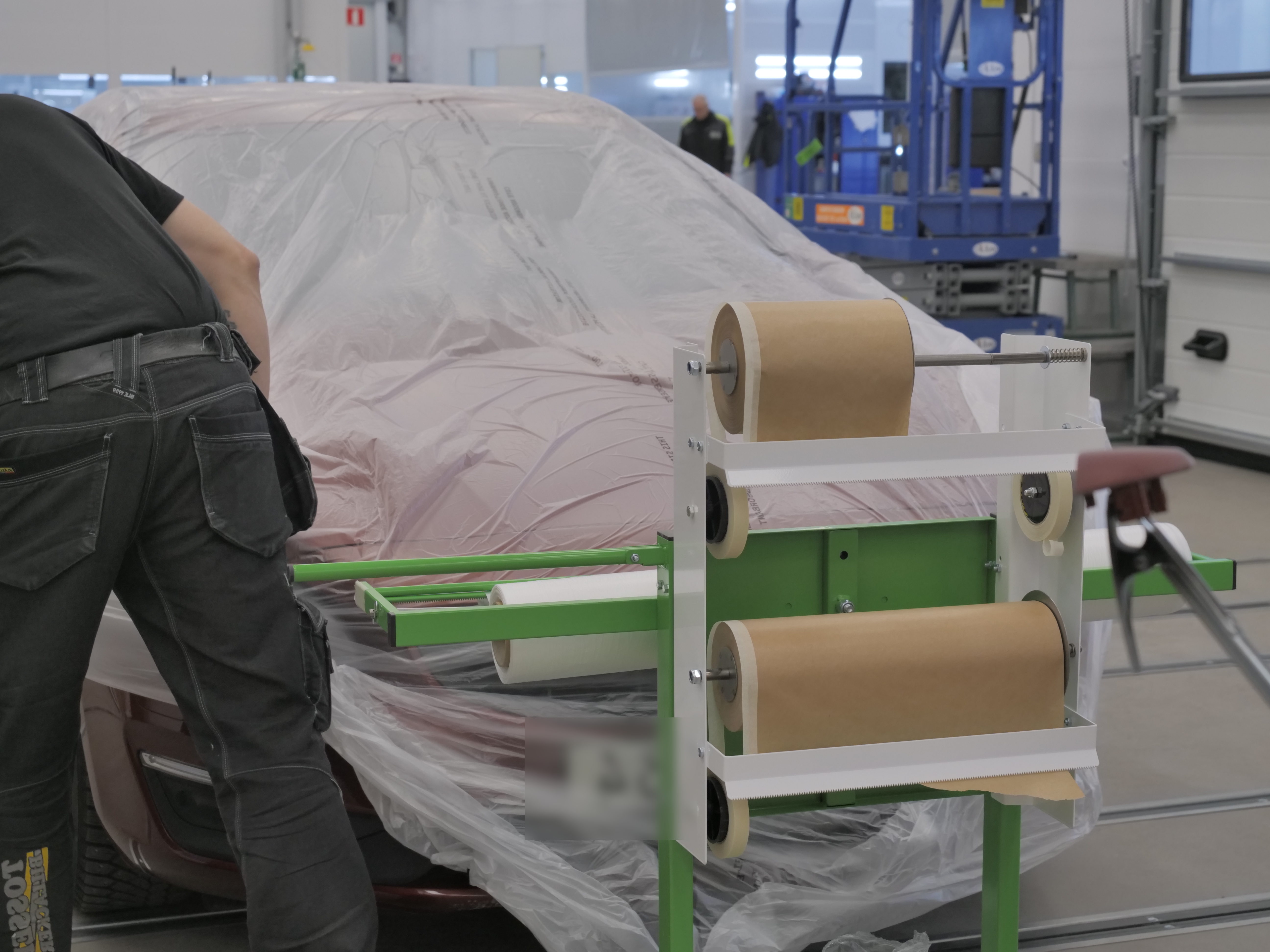
Ask any sprayer what steals the most time in a day, and the answer is rarely the spraying itself. It's the hunting. The right hardener that isn't where it should be. A tin of clearcoat that has gone off. Dust settling on a panel that was finished, so the job has to be done again. Each of those things is small. Together they are a shop that leaks money every day without anyone writing it down.
That leak is exactly what a whole mixing room is built to seal. And when price comes up — which it always does, it's the one objection we hear again and again — the best answer isn't to talk the cost away. It's to do the maths. Openly, cautiously, with your own numbers. Here is how.
The first mistake is to compare a cabinet against an old shelf. A mixing room isn't a cabinet, it's a workplace: cabinets, fittings, installation and sometimes power and ventilation. Put all of it into the investment from the start. That makes the calculation honest, and an honest calculation is the only kind that holds up when it has to be defended to whoever signs for it.
We would rather count too low than too high. Each driver is counted once, never twice, and if we stay cautious on every line the total stays believable.
Material waste is the most honest line, because it shows up in the invoices: scrapped and spilled paint, hardener and clearcoat, plus double purchases of things nobody could find. Count it as a small share of your annual paint spend — two to four percent, no more.
Re-sprays are counted only on the redos that can genuinely be traced to dust or a bad mix. Not every redo, only the ones the room can reasonably remove. Number per month times what a re-spray costs.
Time is counted on minutes saved per day, per sprayer, times working days, times your internal hourly cost — not the fully billable rate. Stick to five to ten minutes. It sounds small, but hunting is exactly that: many small minutes.
Then we subtract running costs and maintenance. And we never count the same saving twice: if a product calculation already books saved time or thinner, it isn't counted again here. Double counting is the fastest way to cut down your own credibility.
Take a shop with two sprayers and a whole mixing room at around SEK 120,000, everything included. A year's saving might look like this:
Put in your own numbers and the range shifts — but it's a range you can trust, not a hero figure. We never promise payback in a few months. Anyone who does is either doing the maths wrong or hoping you won't check.
Cleaner air, the right working height, less dust in the lungs and the eyes — that is real value, but we don't put a price tag on it. It stays what it is: a bonus on top of a calculation that already adds up without it. Order on the floor isn't a soft issue. It shows up in the year's figures. But we don't monetise health, because then the calculation would start to lean towards the too-good-to-be-true.
Would you like us to run this calculation on your own shop, with your numbers? We'll do it, and we'll show our working, line by line. That's the whole point: we teach you the maths, we don't dress it up. Get in touch, or read more about our mixing rooms.
